
Grief is something we'll all go through at some point, let's get our head around it....‘good grief’
five ways to support someone with grief and make sure you aren’t too much or too little during such a cruical time as a mate
Good Grief — 5 Ways to Support Someone With Grief
Fancy reading up on it? Nothing in this campaign is guesswork. Here's what backs each part of it:
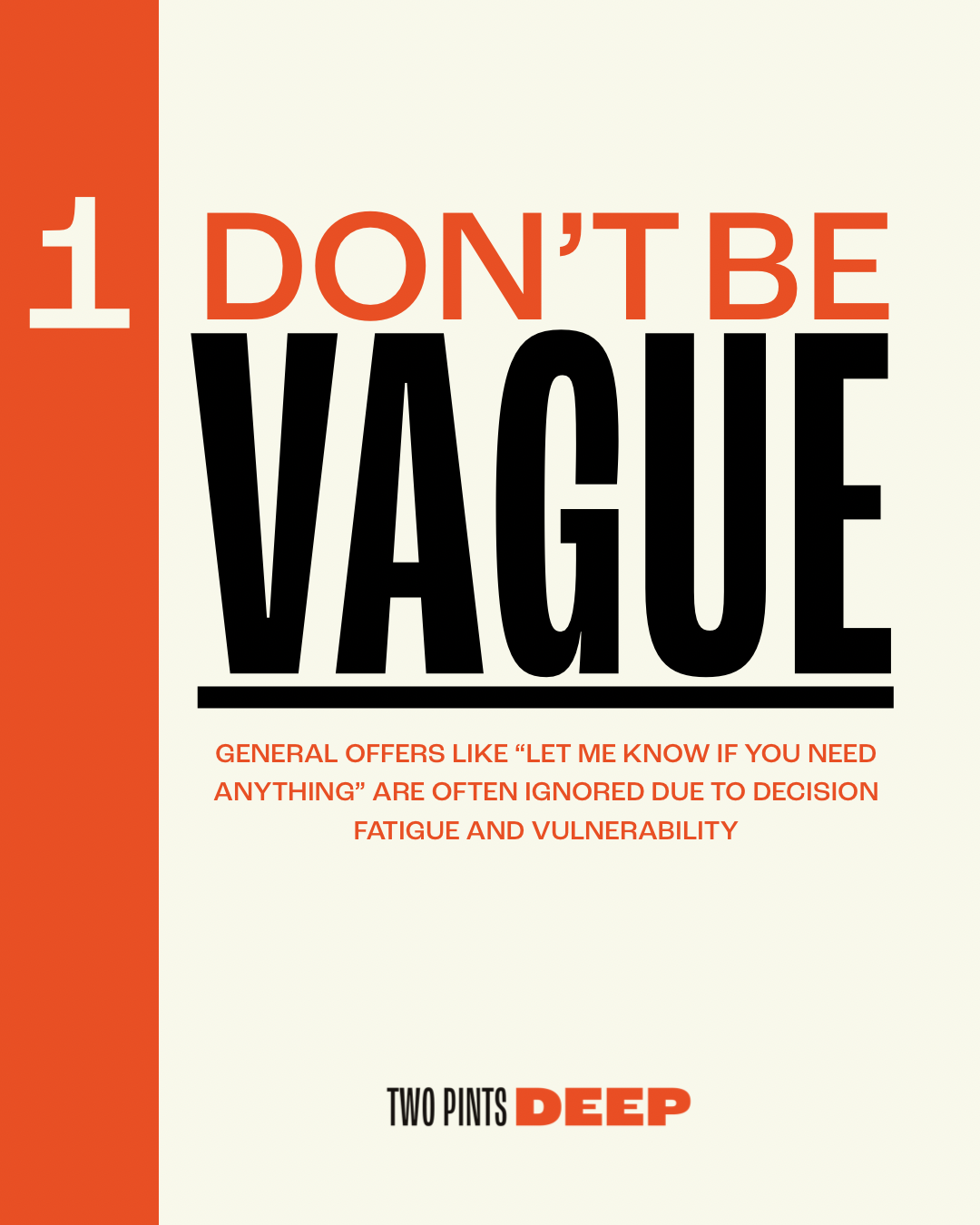
Vague offers like "let me know if you need anything" put the work back on someone who's often too overwhelmed to know what they need — specific offers remove that decision fatigue instead of adding to it. → What's Your Grief — "Thanks for the Offer, But I Don't Know What I Need"
A study of what bereaved people actually found helpful rated practical, specific support highly, while vague advice and general platitudes were named among the unhelpful responses. → Empirical evidence for the compassionate communities approach to bereavement support, PMC
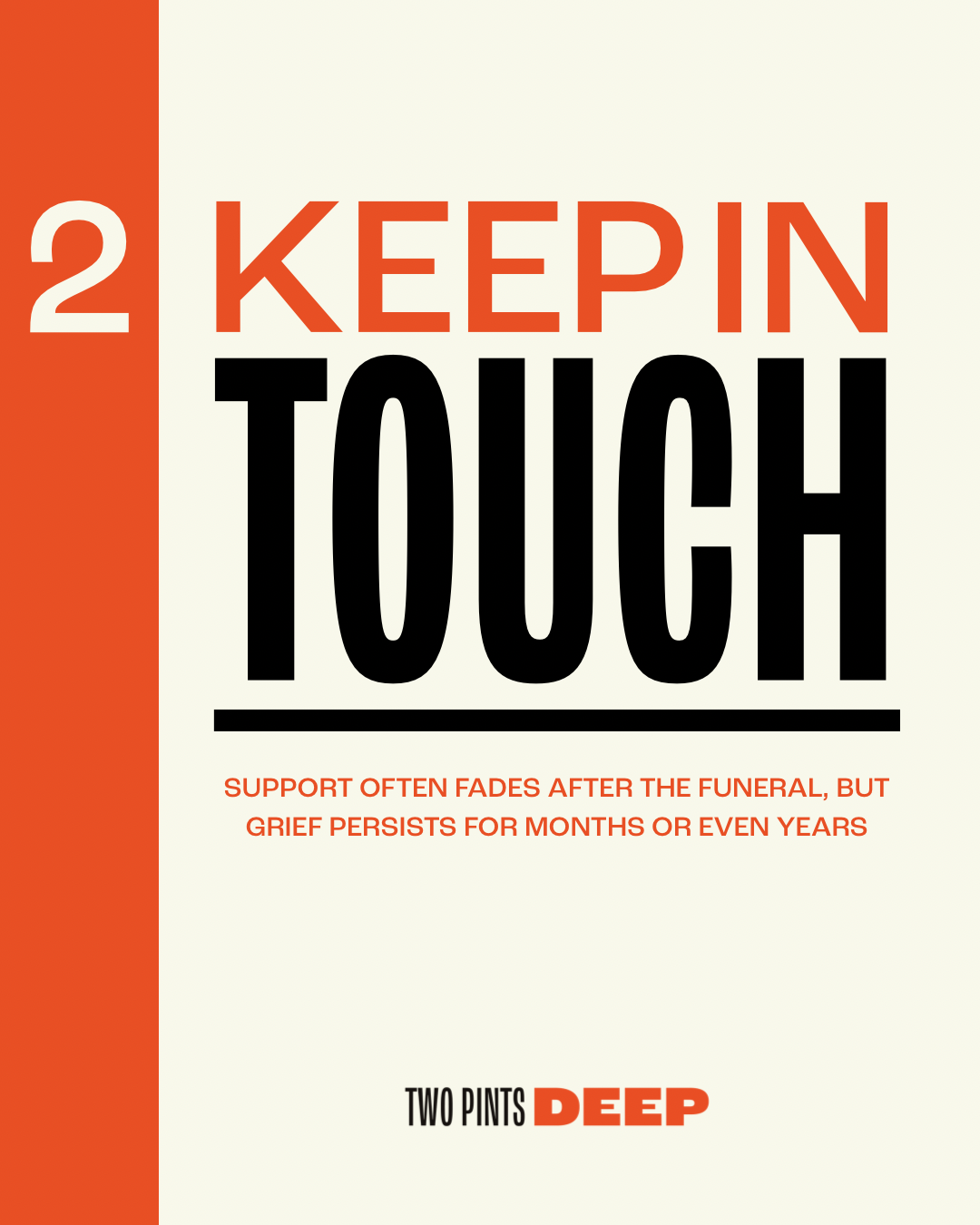
Support needs don't disappear once the funeral's over — a UK-wide bereavement survey found demand for support never drops to zero, and specifically flagged that sustaining support matters as much as offering it early on. → Sue Ryder, "A Better Route Through Grief"
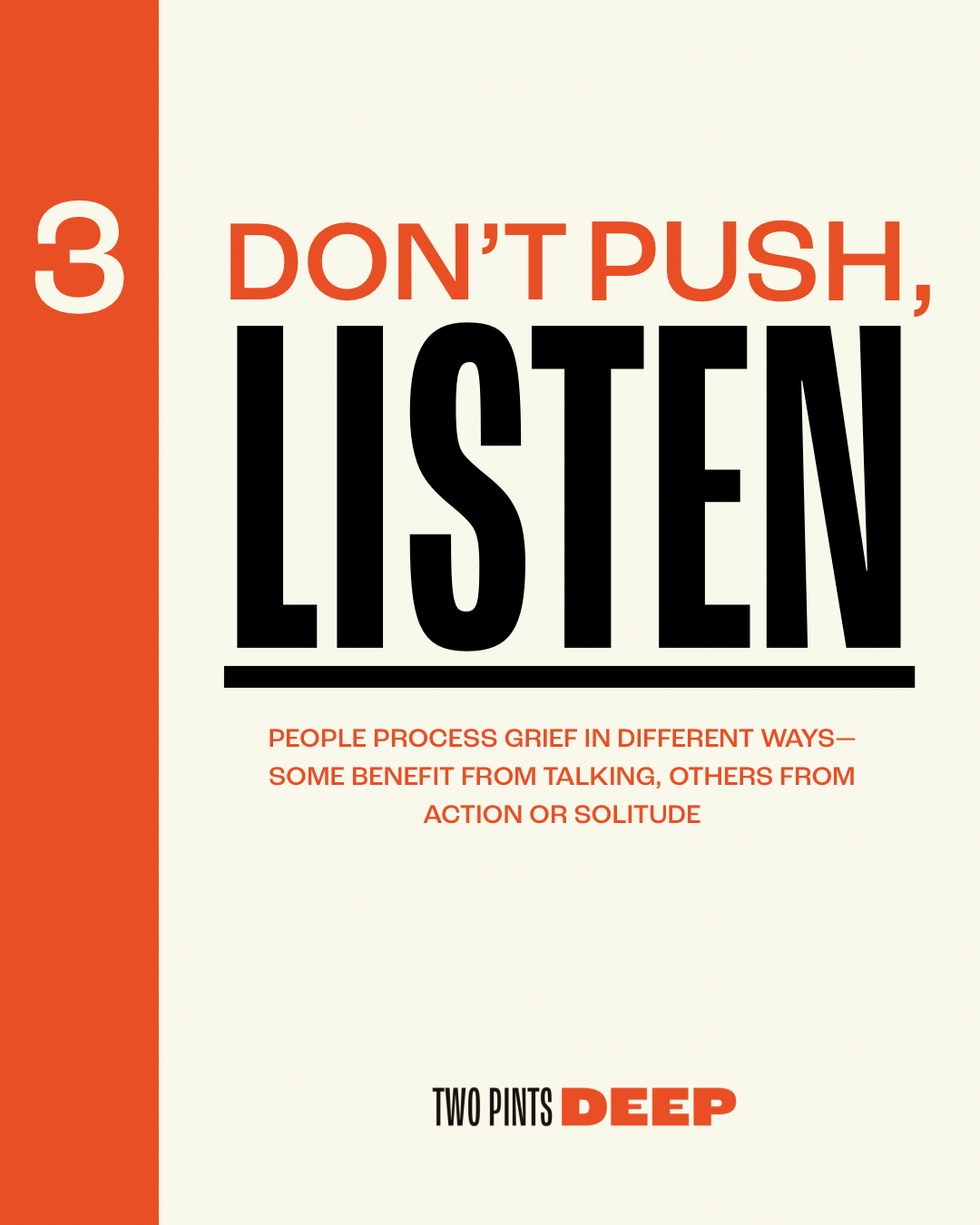
People genuinely process grief differently — some through talking and emotional expression, others through action, problem-solving or time alone — and established grief theory says neither approach is more "right" than the other. → Doka & Martin, Intuitive–Instrumental Grief model
Avoiding someone's name doesn't protect the person grieving — the foundational "continuing bonds" theory of grief found that parents who kept including their deceased child in family life and conversation were psychologically healthier than the old "let go and move on" model assumed. → Klass, Silverman & Nickman, Continuing Bonds theory (1996)
The same compassionate-communities study found presence and listening were what bereaved people valued most — "poor advice" and attempts to fix or minimise the pain were named directly as unhelpful. → Empirical evidence for the compassionate communities approach, PMC